
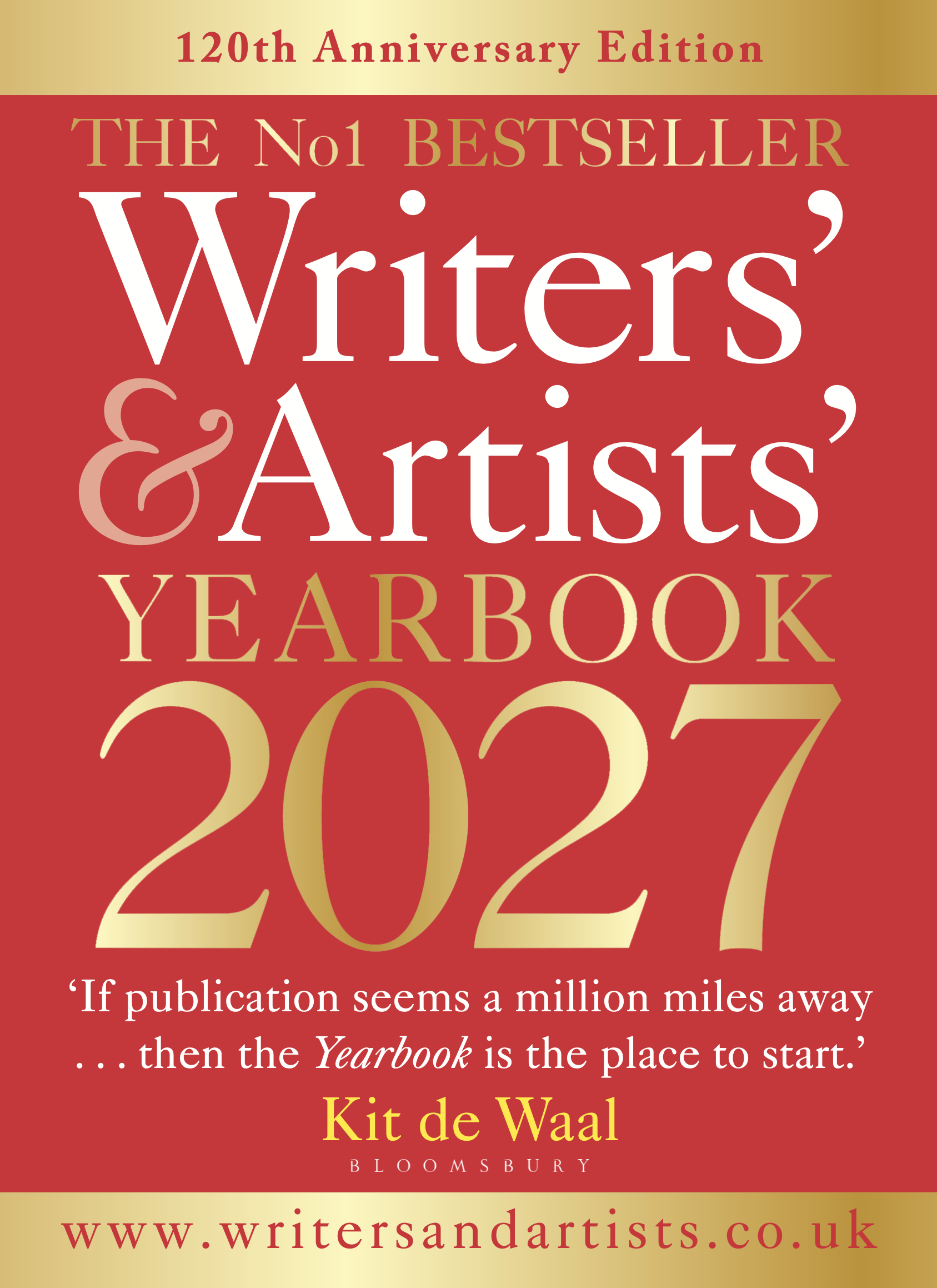
This article was originally written for the 2020 edition of the Writers’ & Artists’ Yearbook, published by Bloomsbury (who also publish Antony's productivity book The Organised Writer). It ran for six consecutive Yearbook editions, with occasional updates, and has been lightly updated again here.
WAYB is an invaluable resource for UK-based writers and artists, both established and aspiring. It features articles such as this from industry figures plus informational resources such as agent and publisher listings.
Introduction
Writing comics and graphic novels is challenging and fun. The medium of sequential narrative art is unique in its applications and possibilities, one that can produce a similar level of immersion and engagement to books yet is as visually striking as movies or TV. It's also littered with the bodies of writers who've taken on the form without truly understanding it.
I won't belabour the point but, suffice it to say, if you have little experience of comics, I strongly urge you to immerse yourself in them before you try to write one. Must you have been reading comics since you were a child? Not at all. There are some great writers who came to comics later in life, but those people did their homework: they fell in love with the medium and set about analysing how it works, how to achieve wondrous immersion through the combination of words and still images. If you're new to comics, you must do the same.
It also won't hurt to read up on the industry itself. Monthly comics is a strange business, punching far above its weight in cultural influence, yet conducted with almost shocking informality. Seminal works are lionised and commemorated for decades; yet, to make a living, writers must constantly generate new work, new ideas, and (with only very rare exceptions) write several different titles per month. In some ways the job is closer to being a magazine writer than a novelist. Instead of submitting a single manuscript to many publishers, you will submit many pitches to a few publishers. And 99% of the time you will be pitching, rather than submitting a finished manuscript.
‘But wait!’ you say, ‘I don't want to write monthly comics. I want to write graphic novels.’ To which I say, ‘Godspeed, and don't give up the day job.’ I am one of the most prolific Anglophone graphic novelists, with more than 20 published ‘Original Graphic Novels’, aka OGNs, to my name.1 I believe graphic novels are the future of the comics medium, and for two decades I've backed up that belief with my output. But I've also spent that time writing monthly comics, videogames, film, books and more, because English-language OGNs do not yet by themselves pay a living wage for the majority of their practitioners.
To break into monthly comics is to join a small club that, to the novice, can feel impenetrable. The old joke goes that it's like breaking out of prison; whenever someone discovers a new route, it's sealed up behind them to prevent others using it. This is partly because there's no formal path to becoming a professional comics writer – no union, no industry programs, no official mentors. Some further education institutions now teach graphic novel writing modules, but the route from there to getting hired requires the same shoe leather as it does for everyone else.
Getting the Word Out
Despite changing technology, the problem for aspiring writers will always be the same: How do you showcase your work to the people who can buy it from you or commission you to write other work? The good news is that the answer is unchanging: write comics in your own time, find aspiring artists to draw them, and show them to editors. By necessity, such scripts should be short. Nobody will draw your 800-page epic for free. Frankly, it's unfair to expect any artist to draw more than half a dozen pages gratis, no matter how good you think it may look in their portfolio. And from your perspective, there's no need; an experienced editor can judge your work within five or six pages. So get used to writing short comic stories and finding artistic collaborators to draw them (unless you can also draw your own stories, but even in that case much of what follows will still apply).
How you show this work to editors depends on many factors, including your comfort with technology, your geographical location, your financial means, and your ease in social interactions. There's no ‘One True Way’ and comics is not an agent-driven industry, so it really is up to you to determine the best path.2 The simplest method nowadays is to put your work online. Facebook, Instagram, and other social media sites – along with dedicated gallery sites such as DeviantArt – have made it essentially free to post your comic samples where anyone with a link can see them.3 The real hurdle is getting editors to click that link in the first place, and this is where the importance of networking rears its head.
Let's clear something up: despite its bad reputation among creatives, networking does not mean getting work by charm alone. It's about building a relationship with people – editors, yes, but also other writers, artists, and publishers – so that when they see your name on a piece of work, they'll be inclined to look at it. An inclination is all it will get you; there are no guarantees. But the alternative is to build online buzz about your talent and wait for editors to come knocking on your door. That's not impossible, but it takes a rare talent and means your destiny is in the hands of others.
The best way to build those relationships, meanwhile, changes with the times. Some editors still prefer to meet new creators, especially writers, at conventions. The time and effort it takes to attend a comic-con shows them you're serious; this is especially true for UK creators travelling to the US, still where the biggest are held (it's a truism that some of us fly 6,000 miles every year to spend time with people who live in the next town over). But, increasingly, relationships with editors and other creators are reinforced, and sometimes entirely built, online – which is good news for anyone unable to make it to a convention.
Conventions themselves are the second way to get your work in front of editors, by giving them photocopied samples. Make sure you have many copies, and that you can afford to give them all away; editors will expect to keep them for reference. What hasn't changed, whether online or in person, are the ground rules about behaviour: be polite, be professional, and take criticism or feedback on board with decorum. Under no circumstances argue with an editor who criticises your portfolio. (You may think that warning unnecessary, but I've seen it happen, and such people do not get hired.)
Pitching Projects
Let's progress to pitching. You've cultivated a relationship, made some impressive sample comics, and an editor wants to read/hear your new pitch. This is a true achievement, and merely reaching this stage puts you well ahead of the pack. But now you're competing for a publisher's budget against other creators, many of whom will be seasoned pros. So focus on quality and a compelling tale, well-told.
There are scant resources on writing pitches, because everyone approaches them differently. If possible, ask the editor what they prefer to see, or if they can give you a sample to use as a template; but equally, remember that they don't know exactly what you're pitching. Ultimately, it's your decision what's relevant to the pitch in question. (The Marvel/DC superhero market is an exception; new writers there are expected to pitch very short takes on existing characters in just a few sentences.)
The golden rule of pitches is, paraphrasing Einstein, to make them ‘as short as possible, but no shorter’. Plot and main characters, yes, of course. Tone and format, if they're important. And finally, if the editor doesn't know you, any relevant credentials. But no more. The only other thing required is your name and email address on the title page.
If you're pitching at a convention, you'll be expected to do so verbally. Don't panic! Nobody expects you to be a slick salesman, and the same principle applies to pitching by email. Editors understand that writers are not always the best advocates of our own work. But whether in person or in writing, they will expect to see enthusiasm. So stick to the story, to your idea, and don't be afraid of getting excited – I might even say get over yourself, because writers are often humble, self-effacing and modest to a literal fault. Remember, when an editor asks you to pitch, they've already decided they might want to work with you. It's up to you to convince them they're right. I'm not suggesting you become an egotist, but if your pitch is filled with hedging caveats ( . . . ‘I'm not sure about that’, ‘I haven't figured this part out yet’, ‘I don't know how many people will be interested’ . . . ) who could blame an editor for passing on it?
Believe in your ideas without apology. Nobody else will do it for you.
Onward to the Future
So, finally, your pitch has been accepted. You've negotiated a contract and been commissioned to write something. What happens now? What should you expect, when you reach the promised land of being paid to write comics? Well, that's when the real work starts. From this point on your destiny is firmly in your own hands, and to give specific advice about comics scriptwriting would require a whole book.
The most important things to remember are not about your script, but about your conduct. Be professional; be clear and upfront about what your editor expects from you; maintain good communication with your collaborators; and always, always hit your deadlines, because an artist, colourist, letterer, and even printer, are all waiting on you.
Follow those principles, create good work, and one day you'll look up from your keyboard to remind yourself you're being paid to write comics. Have fun.
1. The majority of books in a store's graphic novel section are actually collections of previously published monthly comics. A 'true' graphic novel is one that has never been serialised and is published as a single volume, like a prose novel. OGNs are increasingly common, but still in the minority of comics published. ↩
2. Very few comic creators have agents. There's rarely enough money in it, and in any case not many agents are familiar with the industry's idiosyncrasies. Comics publishers know this, so don't worry about it. Nobody will object if you have an agent, but not having one is entirely normal and won't count against you. ↩
3. Online gallery and portfolio sites come and go with such frequency that it would be impossible for me to keep up, so I apologise if these references are out of date. Suffice to say, those resources are out there and aren't hard to find. ↩
Originally published in the Writers’ & Artists’ Yearbook 2020, © Bloomsbury
Last updated May 2026